SEO · 8 min read
How Long Does SEO Take to Work? A Realistic 2026 Timeline
The honest answer is not the one most agencies give you. Here is what actually happens month by month, what moves first, and how to tell early whether your SEO is on track or wasting money.
By Hivex Digital ·
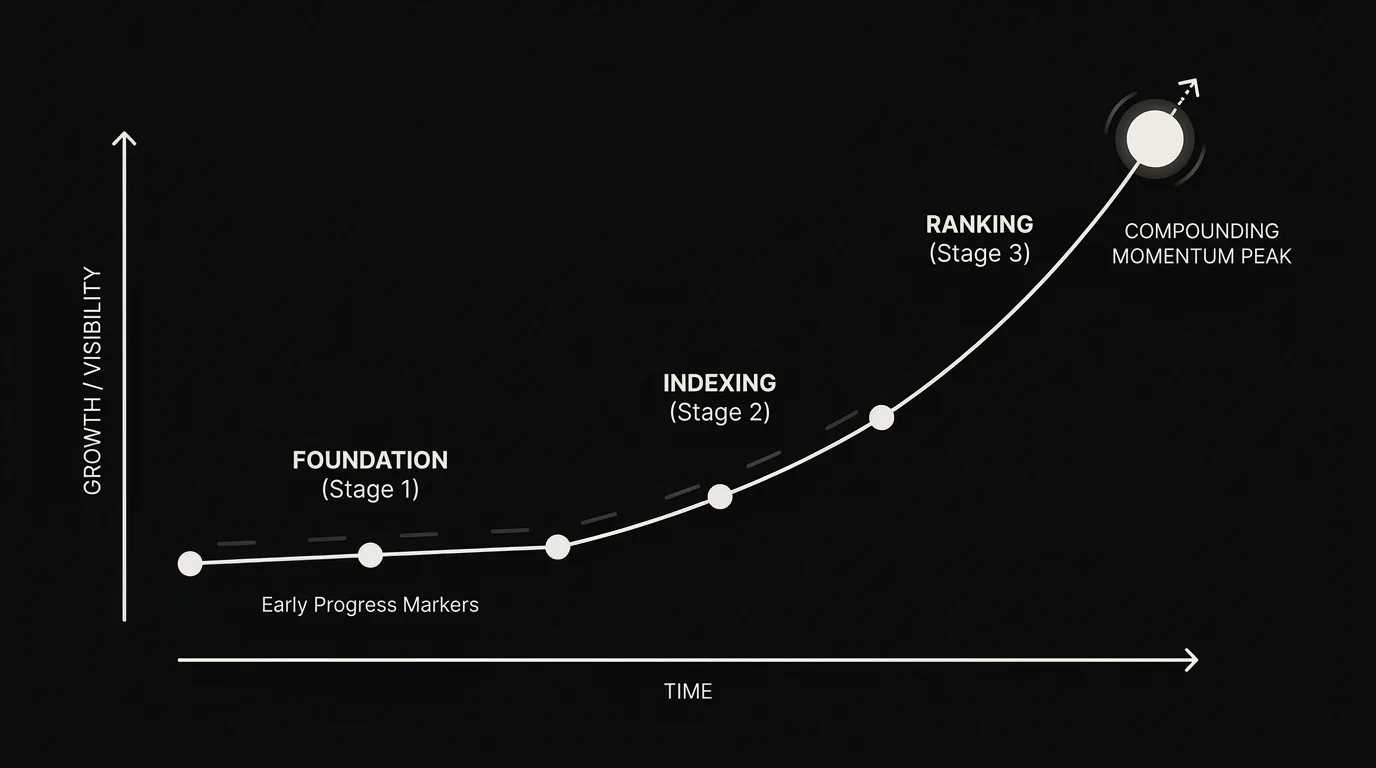
Every business owner who invests in SEO asks the same question in the first week: when will I see results? It is a fair question, and most agencies answer it badly. Some promise page one in 30 days, which is a lie for anything worth ranking for. Others say it takes a year, which scares off people who could see real movement much sooner.
The truthful answer has a shape, not a single number. Different things happen at different times, and if you know what to look for, you can tell within the first two months whether your money is working. This is the timeline we walk clients through before we start.
The short answer, by keyword difficulty
SEO speed depends almost entirely on how competitive your target keywords are and what condition your site starts in. There is no universal timeline, but there is a reliable range.
- Local and low-competition terms: real movement in 60 to 90 days, sometimes faster if your Google Business Profile is strong.
- Mid-competition commercial keywords: 4 to 6 months to reach the first page and start pulling steady leads.
- High-competition head terms: 6 to 12 months to rank and hold, longer in crowded categories like legal, finance, or SaaS.
- Technical wins: traffic recovery within weeks when the problem was indexing, speed, or a penalty, not content.
SEO is not slow because the work is slow. It is slow because trust compounds, and trust cannot be rushed with budget.
What actually happens, month by month
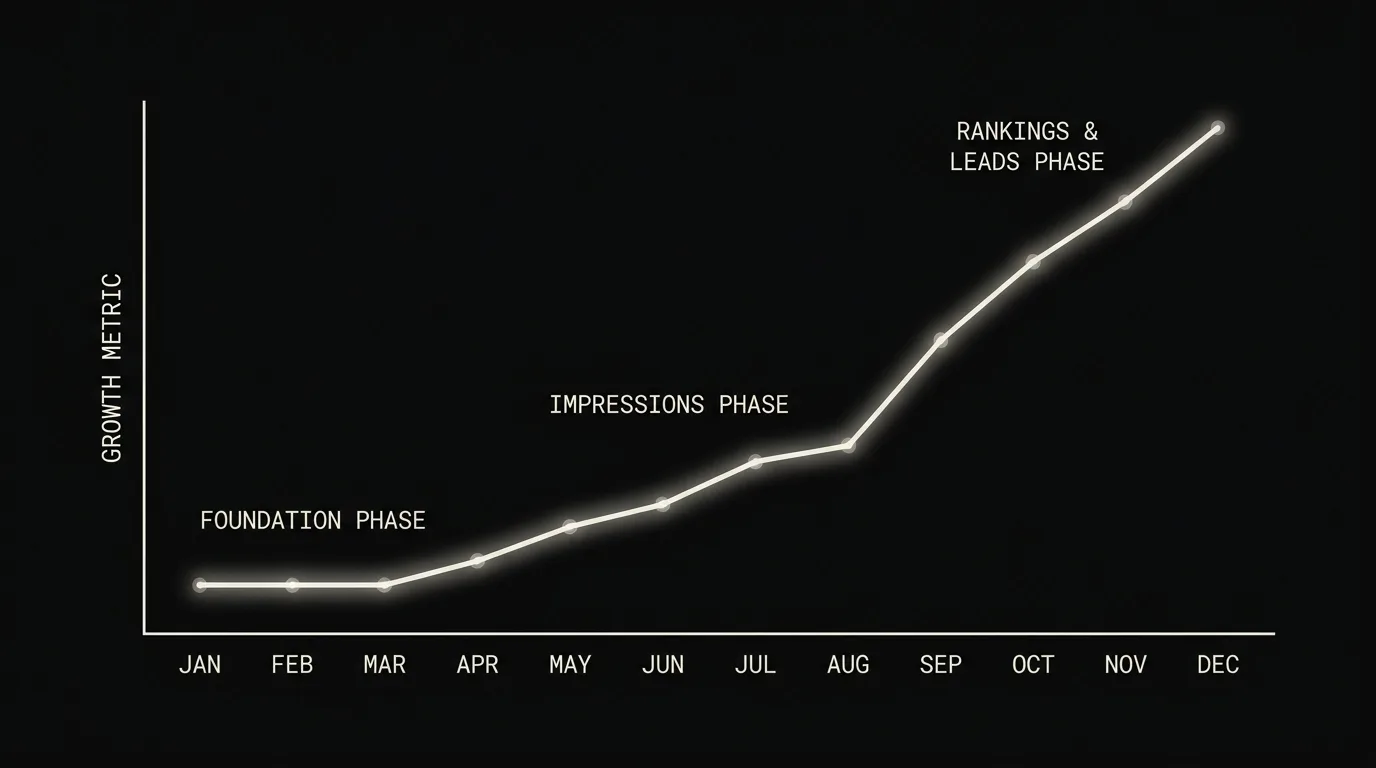
Month 1: foundation and indexing
The first month is unglamorous and it is where most of the eventual result is decided. We audit technical health, fix crawl and indexing problems, clean up Core Web Vitals, and map keywords to pages so no two URLs fight for the same phrase. You rarely see ranking gains yet. What you should see is new pages getting indexed within hours instead of weeks, which is the first sign the foundation is sound.
Months 2 to 3: early signals
This is when the leading indicators appear. Impressions in Search Console start climbing before clicks do. Target keywords crawl up from page five to page two or three. Local terms often break into the map pack around here. You may not feel it in your lead count yet, but the data is telling you the direction is right.
Months 4 to 6: traffic and leads
Now the compounding starts to pay. Pages that were stuck on page two move to page one. Commercial queries begin sending traffic that actually converts, because the pages were built around buyer intent rather than curiosity. For most local and mid-competition businesses, this is the window where SEO stops being a cost and starts being a channel.
Months 6 to 12: momentum
Authority accumulates. New pages rank faster because the domain has earned trust. You start ranking for terms you never explicitly targeted. This is the point where SEO becomes the cheapest lead source you have, because the cost was front-loaded and the traffic keeps arriving.
Why SEO takes longer than paid ads
Ads buy attention instantly. You pay, you appear. SEO earns attention, and earning takes time for three reasons. Google has to crawl and process your changes. It has to trust a page enough to rank it, which new pages have not earned yet. And it watches how people behave once you rank, adjusting position based on whether searchers stay or bounce. None of that can be paid to go faster.
This is exactly why we often tell clients to run ads while SEO matures. Ads cover the gap and pay the bills for the six months SEO needs to compound. Then, once organic is pulling its weight, you can lean on it as the durable, lower-cost channel it becomes.
How to tell if your SEO is failing early
You do not have to wait a year to know something is wrong. These are the red flags that mean your SEO is not on track, regardless of what the monthly report says.
- New pages still are not indexed after weeks. The technical foundation is broken.
- Impressions are flat after three months. You are targeting the wrong keywords or not publishing enough.
- Traffic rises but leads do not. You are ranking for vanity terms with no buying intent.
- The agency reports only rankings and traffic, never leads or revenue. They are optimizing for the wrong scoreboard.
If your SEO traffic is growing but your phone is not ringing, you do not have an SEO problem. You have an intent problem.
How to make SEO work faster
You cannot skip the trust-building, but you can remove the things that slow it down. Fix the technical foundation first so Google can index instantly. Target commercial-intent keywords instead of high-volume vanity terms, because ranking third for a keyword buyers use beats ranking first for one they do not. Build pages that convert so the traffic you earn turns into leads. And if you are local, treat your Google Business Profile as a priority, not an afterthought, because it is often the fastest visibility you can win.
SEO is a compounding asset. The businesses that win are the ones who understand the first 90 days are about building the machine, not harvesting from it. Judge it on leading indicators early, and on leads and revenue by month six.
Frequently asked questions
For lower-competition and local terms, meaningful movement usually shows in 60 to 90 days. For competitive commercial keywords, expect 6 to 12 months to reach and hold page one. Technical fixes can lift traffic within weeks, but ranking for money terms is a compounding process, not a switch.
Google has to crawl your changes, trust the site enough to rank it, and watch how users behave once you do rank. New pages also start with no authority or history, so they earn position gradually. The delay is trust and data accumulating, not the work itself being slow.
Watch leading indicators: pages getting indexed within hours, impressions rising in Search Console even before clicks, and target keywords climbing from page five to page two. Those shifts show up weeks before the traffic and leads do.
Usually yes. Local map-pack results depend heavily on Google Business Profile signals, reviews, and proximity, which can move faster than organic rankings for competitive national terms. A well-optimized local profile can gain visibility in weeks.