Paid Ads · 7 min read
How to Lower Your Cost Per Lead (Without Buying More Traffic)
Cost per lead is a product of two things: how much you pay for a click and how many clicks it takes to get a lead. Most businesses only try to fix the first. Here is how to fix both.
By Hivex Digital ·
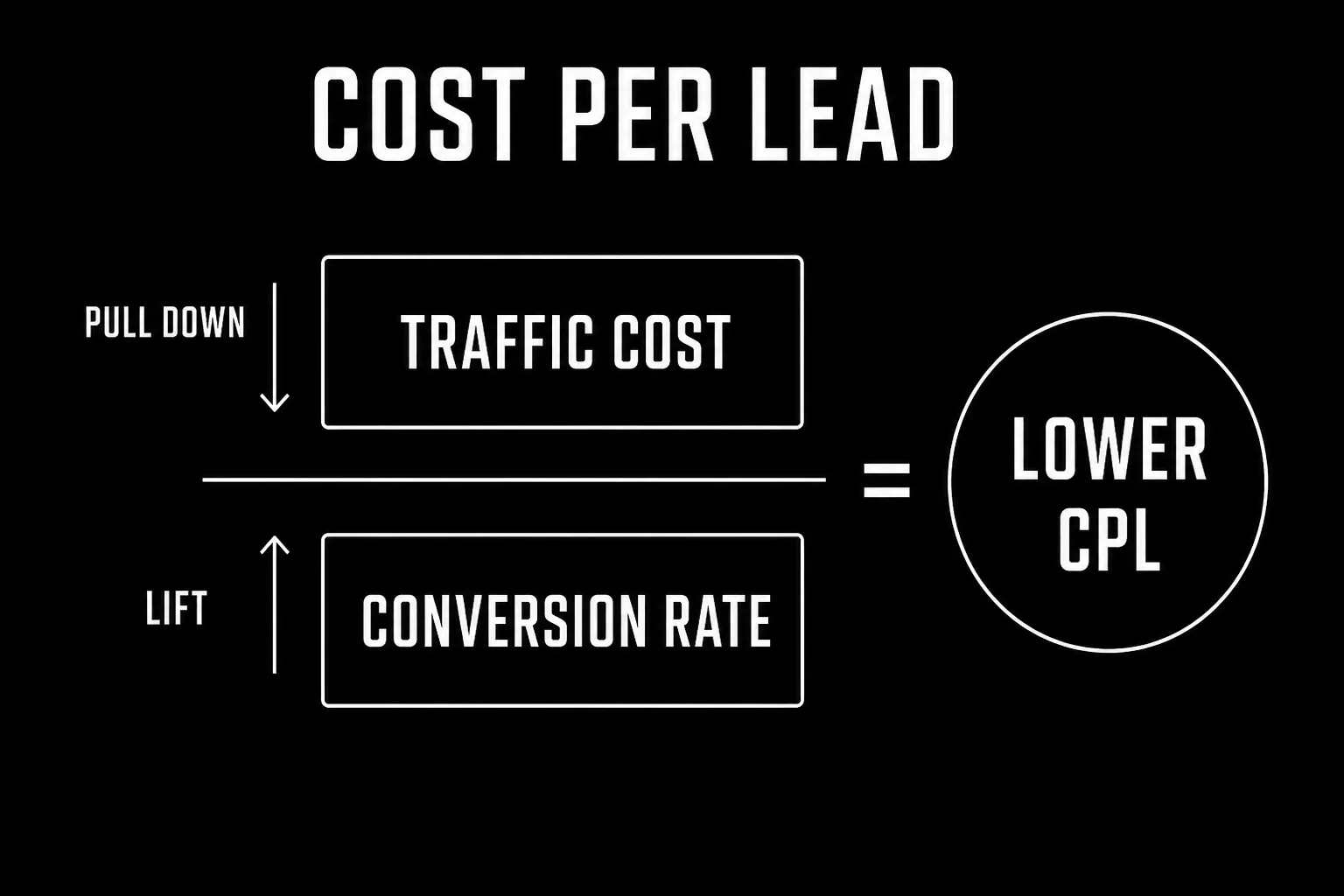
Cost per lead is a simple fraction: what you spend on traffic divided by how many leads that traffic produces. Most businesses trying to lower it focus only on the numerator — spending less on clicks. The faster lever is usually the denominator — converting more of the clicks you already pay for. Both matter, and the businesses with the lowest CPL work both sides at once.
What actually determines your cost per lead?
CPL = traffic cost ÷ conversion rate. That means a 50 percent improvement in conversion rate has exactly the same effect as a 50 percent reduction in cost per click — it halves your CPL. The difference is that conversion rate is almost entirely within your control, while cost per click is set by a competitive auction you cannot fully control.
Doubling your conversion rate halves your cost per lead. That is the same math as cutting your ad spend in half, but it does not reduce your lead volume.
How do you lower the traffic cost side?
On the traffic side, the goal is to pay only for clicks from people who are likely to become leads. Three moves have the most impact.
- Tighten keyword match types from broad to phrase or exact to stop paying for loosely related searches.
- Build a negative keyword list from your search terms report to exclude queries that click but never convert.
- Apply bid adjustments to reduce spend on devices, times, and locations with poor conversion rates.
These are not about spending less overall. They are about concentrating spend on the searches where buyers actually are. A smaller, tighter campaign often produces more leads than a broad one at the same budget because every click is more qualified.
How do you improve conversion rate to lower CPL?
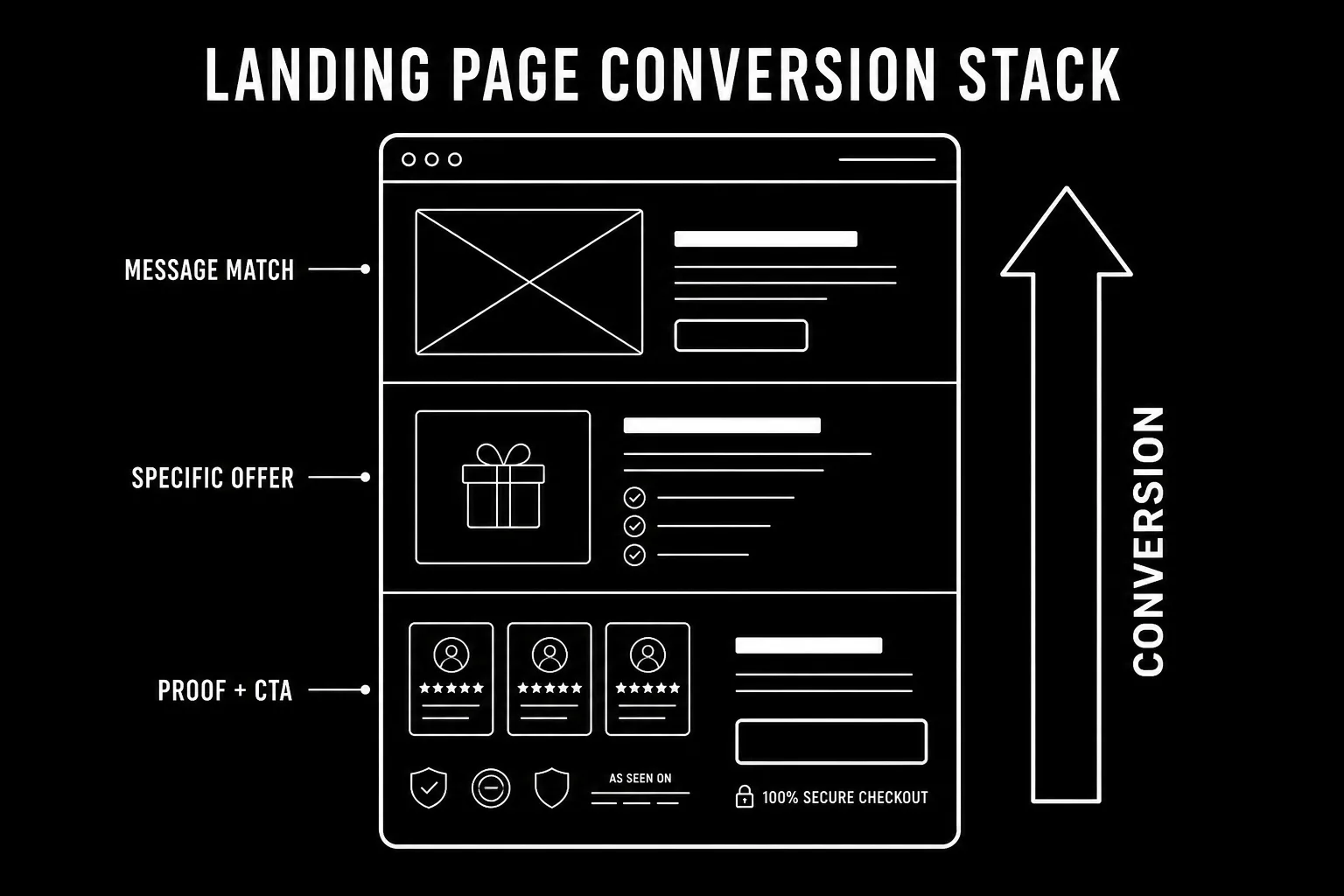
Conversion rate is where most CPL improvement lives, and it is faster to move than traffic cost. The page a visitor lands on after clicking your ad is responsible for whether they become a lead or leave. Most landing pages fail at one of four things.
Does your page match the ad that sent the visitor?
Message match is the single biggest conversion killer in paid search. If your ad promises emergency plumber available now and the landing page talks about your company history, the visitor feels a disconnect and leaves. The page must continue the exact conversation the ad started. Same offer, same language, same urgency.
Is the offer clear and specific?
A vague offer converts poorly. Free consultation means nothing to a visitor who has seen it on every competitor's page. A specific offer — free 30-minute audit with a written report, or same-day quote with no obligation — gives the visitor a concrete reason to act and a clear picture of what they get. Specificity builds trust and reduces the friction of the first step.
Is there proof near the call to action?
Visitors do not trust claims without evidence. A review, a named result, or a recognizable logo placed next to the form or button reduces the risk the visitor feels at the moment of decision. Proof does not need to be elaborate — a single specific testimonial with a name and outcome outperforms a generic five-star rating.
Is the form asking for too much?
Every field you add to a form costs you completions. Ask only for what you genuinely need to take the next step. Name, phone or email, and one qualifying question is usually enough for a first contact. You can gather more information on the call. A shorter form converts more visitors into leads, and more leads at the same spend means a lower CPL.
Which lever moves CPL faster: traffic or conversion?
Conversion rate changes take effect as soon as the new page goes live and traffic flows through it. You can see the impact within days to a couple of weeks. Traffic cost changes — negative keywords, match types, bid adjustments — take effect immediately in the auction but need a few weeks of data to show stable results. For most accounts, the fastest CPL improvement comes from fixing the page first, then tightening the traffic.
The businesses with the lowest cost per lead are not the ones with the cheapest clicks. They are the ones who convert the most of the clicks they pay for. Fix the conversion rate, then optimize the traffic, and CPL drops from both directions at once.
Frequently asked questions
It depends entirely on your industry and what a customer is worth. A good CPL is one where the customer lifetime value justifies the acquisition cost with a healthy margin. For most service businesses, a CPL of 10 to 20 percent of the average job value is a reasonable target, but the only number that matters is whether the leads are profitable.
High CPL usually comes from one of three places: paying for clicks from searches that are not buyer-intent, a landing page that does not convert the traffic you are sending, or an offer that does not give the visitor a clear reason to act. Fixing the conversion rate is often faster and cheaper than trying to lower the cost per click.
Directly and significantly. If your page converts at 2 percent and you improve it to 4 percent, your cost per lead halves with no change in ad spend or traffic. Landing page conversion rate is the most controllable lever in the CPL equation.
Conversion fixes on a landing page can show results within days to a couple of weeks once live. Negative keyword and match type changes take effect immediately. Audience and bid adjustments typically need a few weeks of data to stabilize. The fastest wins are usually on the page, not in the ad account.