SEO · 7 min read
Local SEO for Atlanta Businesses: How to Rank in the Map Pack
The three businesses in Google's map pack take the majority of local clicks. Here is exactly how the local algorithm decides who gets those spots, and how an Atlanta business earns one.
By Hivex Digital ·
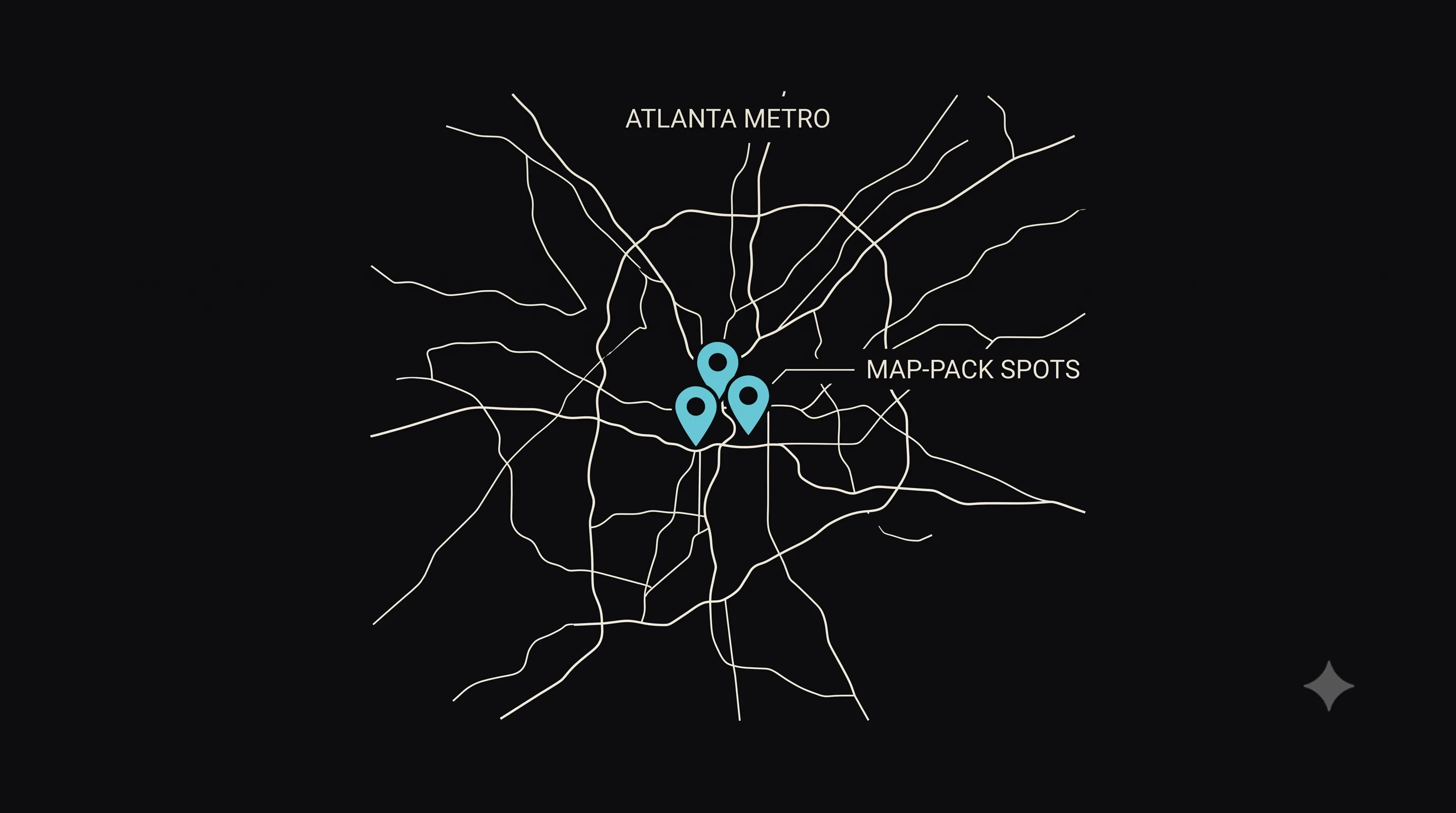
When someone in Atlanta searches for a service you offer, three businesses appear in a box with a map above the regular results. That box is the local pack, and it captures the majority of clicks for local searches. Everyone below it fights over the leftovers. If you run a business that serves a local area, ranking in that box is often the single highest-return marketing move available to you.
The good news is that the local algorithm is more knowable than most people assume. Google has told us the three things it weighs, and the businesses that win are simply the ones who address all three deliberately instead of hoping.
What are the three ranking factors for the Google map pack?
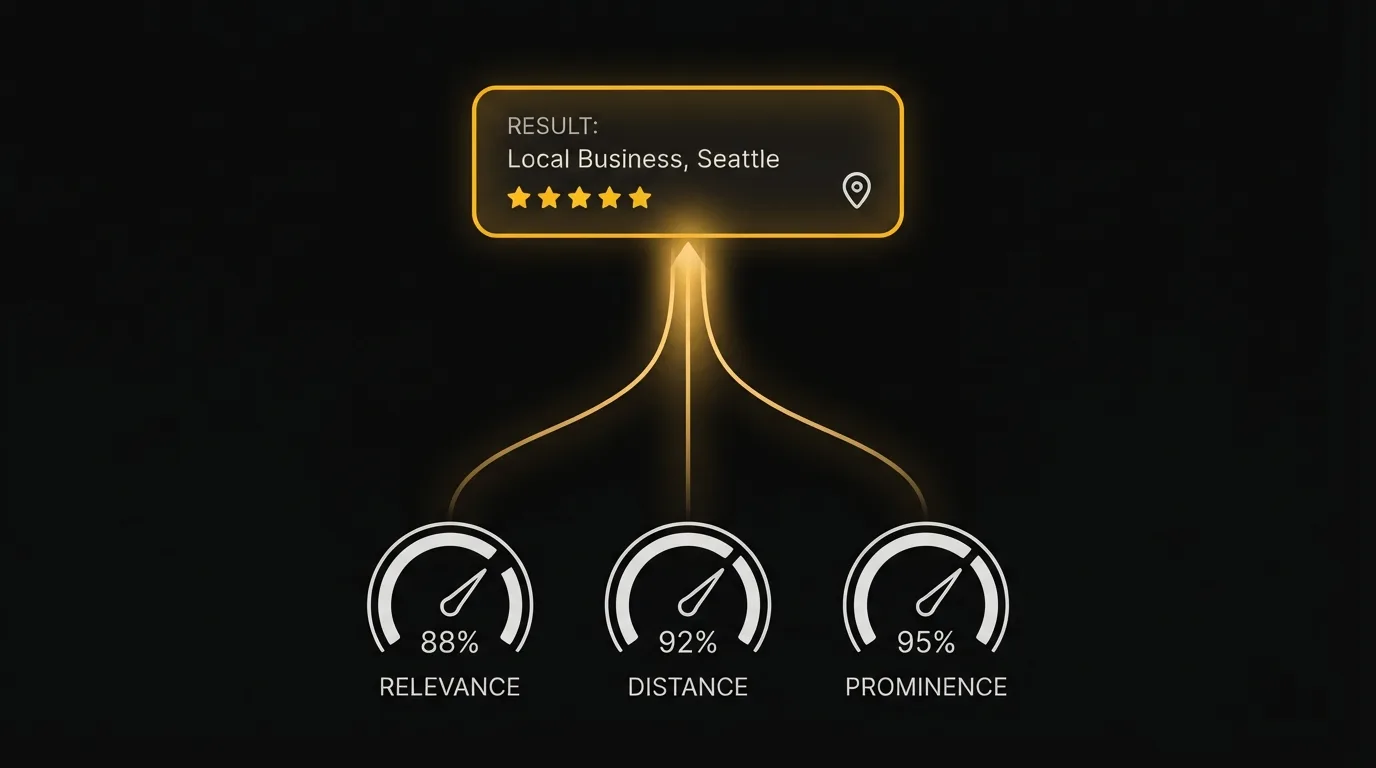
Google ranks local results on relevance, distance, and prominence. Every optimization you make is really an attempt to strengthen one of these three.
Relevance: does your profile match the search?
Relevance is how well your business matches what someone searched. It is driven mostly by your Google Business Profile: your primary category, the services you list, your description, and the words in your reviews. A plumber whose profile only says contractor is telling Google it is less relevant than the competitor whose profile says emergency plumber, so it ranks lower for that search.
Distance: how close are you to the searcher?
Distance is the one factor you cannot fully control. Google favors businesses near the person searching or near the location in their query. You cannot move your storefront, but you can build location-specific pages for the Atlanta neighborhoods and suburbs you serve, which helps you appear for those areas even when you are not the closest pin.
Prominence: how well known and trusted are you?
Prominence is your reputation in Google's eyes. Reviews are the biggest lever here: how many, how recent, how positive. Citations across the web, links to your site, and overall search presence all feed it too. This is the factor you can most aggressively improve, and it is where most Atlanta businesses leave the easiest wins on the table.
How do you optimize your Google Business Profile?
Your Google Business Profile is the center of local SEO. It is free, it is fast to improve, and most competitors have half-finished ones. Complete it properly and you are already ahead.
- Choose the most specific primary category that describes your core service, not a broad catch-all.
- Fill every field: services, service areas, hours, attributes, and a description written for buyers using the terms they search.
- Add real photos regularly. Active profiles signal a live, legitimate business.
- Use Google Posts to stay current. A profile that updates looks more prominent than one frozen for a year.
- Answer questions and respond to every review, positive or negative. Engagement is a signal and a trust builder at once.
The review engine that moves rankings
Reviews are the closest thing to a lever you can pull on prominence. But the goal is a steady stream of genuine reviews, not a sudden pile. Google filters obvious manipulation, and a burst of five-star reviews in one week from new accounts reads as exactly that.
Build a simple system: ask every satisfied customer at the moment they are happiest, make it one tap with a direct review link, and keep the flow consistent month over month. Reviews that mention the specific service and the neighborhood add relevance on top of prominence, so a review saying great HVAC repair in Decatur is worth more to you than a generic five stars.
Ten genuine reviews earned steadily over ten weeks beat fifty bought in a weekend. Google can tell the difference, and so can your customers.
Citations and your website
Citations are mentions of your business name, address, and phone number across the web: directories, industry sites, local listings. Consistency matters more than volume. If your address is formatted three different ways across the internet, you are diluting the signal. Pick one exact format and use it everywhere.
Your website reinforces everything. Google cross-references it to confirm you are relevant and real. Location and service pages, matching contact details, and local business schema all feed the same system that ranks the map pack. Local SEO is not the profile alone; it is the profile and the site telling the same story.
Why Atlanta specifically is winnable
Atlanta is a large, competitive metro, which scares some businesses off local SEO. It should do the opposite. In a big market, most competitors optimize poorly, so the gap between a properly run local profile and an abandoned one is enormous. Neighborhood-level targeting also works well here because searchers use area terms constantly, from Buckhead to Marietta to Decatur. Own your niche in your neighborhoods first, then expand outward.
Local SEO rewards consistency more than cleverness. Complete the profile, earn reviews steadily, keep citations clean, and back it with a site that confirms your relevance. Do that for a few months and the map pack stops being something your competitors own.
Frequently asked questions
Optimize your Google Business Profile with the right primary category, complete service and location details, and steady genuine reviews. Then reinforce it with consistent citations across directories and locally relevant pages on your website. Google ranks the map pack on relevance, distance, and prominence, and those levers move all three.
Local visibility often moves faster than national organic SEO. A well-optimized Google Business Profile with active reviews can gain map-pack traction in weeks to a couple of months, though competitive Atlanta categories like legal, HVAC, or real estate take longer to hold the top three.
Yes. Review quantity, recency, and rating are prominence signals that influence map-pack position, and review text that mentions your services and neighborhoods adds relevance. A steady stream of genuine reviews outperforms a burst of fake ones, which Google actively filters.
Very much. Google cross-references your website to confirm relevance and legitimacy. Location and service pages, consistent name, address, and phone details, and local schema all feed the same ranking system that powers the map pack.