Paid Ads · 8 min read
How to Get More Impressions on the Same Ad Budget in 2026
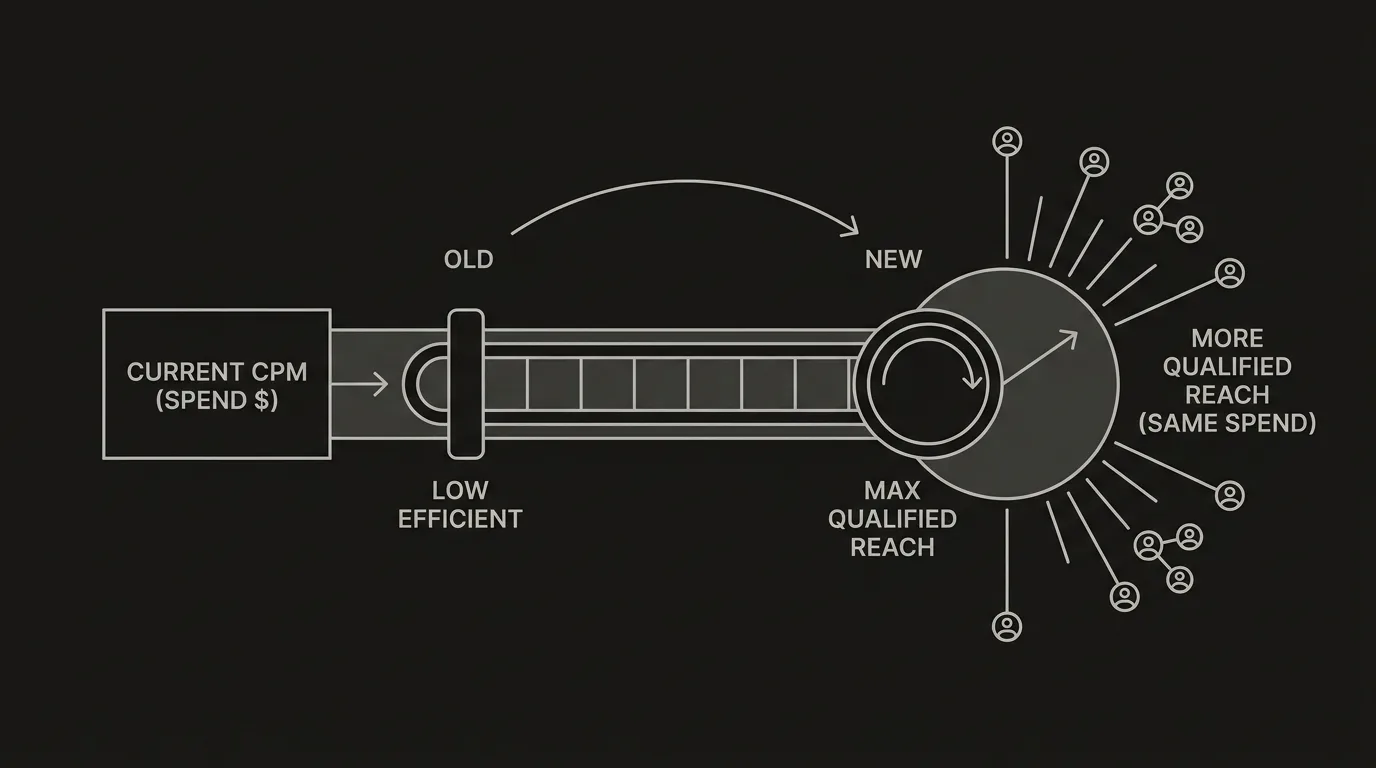
Your CPM is not a fixed price. It is a lever. Here is how to pull it, and why more impressions is only worth chasing when the right people see them.
By Hivex Digital ·
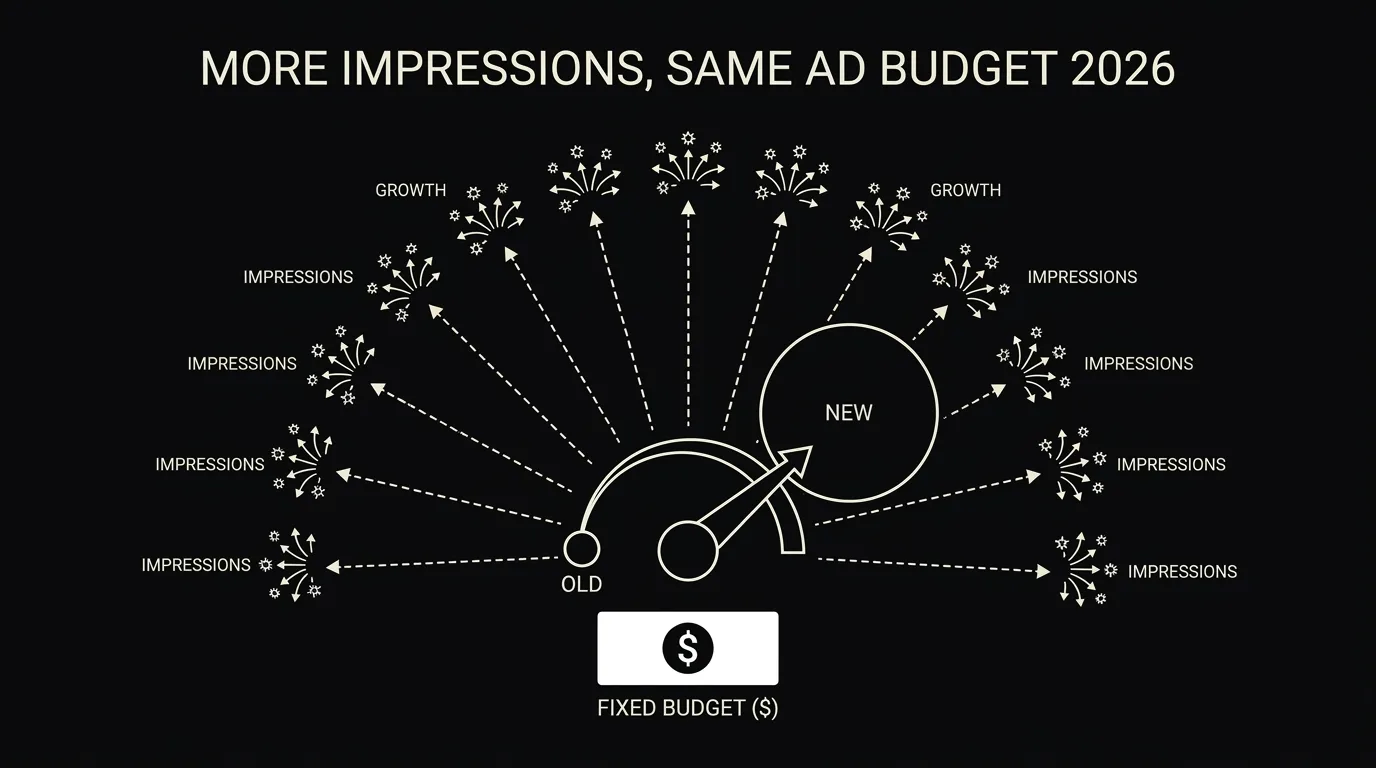
Most advertisers treat their cost per thousand impressions as a weather report: something that happens to them. It is not. CPM is one of the few numbers in your account you can move on purpose, and moving it down is the cleanest way to buy more reach without adding a dollar to your budget.
This guide is the version we give clients before we touch their spend. It works on Meta and Google, it holds up under 2026 auction behavior, and it comes with one warning we will repeat: more impressions is only a win when the right people are the ones seeing your ad.
Impressions are cheap. Qualified impressions win.
You can buy a million impressions tomorrow for pocket change if you stop caring who sees them. That is the trap. The goal is not raw reach. It is the largest number of the right people you can put your offer in front of for a fixed amount of money. Keep that sentence in mind through everything below, because every tactic that lowers CPM can also drag in cheaper, worse attention if you are careless.
Impressions are an input. Booked calls and closed deals are the result. Optimize the input only in service of the result.
Why is your CPM higher than it needs to be?
Meta does not sell impressions to whoever bids most. It awards them using a total value score, roughly your bid times your estimated action rate times your ad quality. Two of those three inputs are in your hands. That means you can pay less for the same impression without lowering your bid, by giving the auction better signals.
Google's auction rewards the same idea through Quality Score and Ad Rank. Relevant ads with strong expected click-through and good landing pages get cheaper placement. In both systems, the advertiser who earns attention pays less for it. Fatigued creative, a cramped audience, and ad sets stuck learning all push your CPM up because the platform reads them as weak signals.
How can you get more impressions on the same ad budget?
1. Fix the creative before you touch anything else
Creative is the single biggest lever on CPM, and it is the one most advertisers treat as fixed. Accounts routinely cut CPM by 30 to 40 percent on creative alone, no change to budget or targeting, because engaging content earns cheaper impressions. Watch time, saves, comments, and shares all feed back into a lower price for reach. Weak creative gets taxed.
Practical version: refresh your top creatives every two to three weeks before fatigue sets in, and lead with proof. For our ads clients the winning creative is almost never the prettiest one. It is the one with a real result on screen in the first two seconds.
2. Stop over-narrowing your audience
Tight interest stacks feel precise and cost you money. A small audience means you bid against yourself for the same handful of people, and the price of reaching them climbs. In 2026 the experienced move is the opposite of what it was five years ago: go broad and let the machine find converters, especially if your pixel has history to learn from. Broader targeting usually lowers CPM and keeps cost per result competitive.
3. Let your placements breathe
Feed placements on Facebook and Instagram can cost two to three times what Stories, Reels, and the Audience Network cost. Locking your ads to feed only is paying premium rates by choice. Turn on the platform's automatic placements so it can spend where inventory is cheap, then read the placement breakdown and prune what genuinely underperforms on conversions rather than on vanity metrics.
4. Consolidate ad sets out of the learning phase
Fifteen ad sets each starved of data will all sit in learning, and learning is expensive. Pause the weakest, pool budget into fewer higher-volume ad sets, and give each enough conversions per week to stabilize. A stable ad set is a cheaper ad set because the platform stops paying a premium to explore.
5. Use bid caps to force efficiency
If you want a hard ceiling on what you pay, set a bid cap 30 to 40 percent below your recent average and let volume find its level. You will lose some of the most expensive impressions, which is the point. This is a scalpel, not a default; use it once you know your numbers, not on day one.
6. Time your spend around the crowd
You are bidding against everyone else's calendar. CPMs spike 30 to 50 percent in Q4 as holiday advertisers pile in, and they run hotter at peak hours. Where your offer allows it, weight budget toward off-peak windows and lighter seasons. The same ad costs less when fewer people are shouting over you.
7. Know the Google-versus-Meta impression math
If raw impressions per dollar were the only goal, the gap is stark: Google Search can run $90 to $260 or more per thousand impressions, while Meta prospecting often sits at $10 to $18. But that comparison is a trap on its own, because a Google Search impression is a person typing what they want to buy, and a Meta impression is a person scrolling. Do not flee to Meta for cheap reach. Audit where your Google money goes, brand versus non-brand, Search versus Shopping versus Performance Max, cut the waste, and reallocate by the job each platform does in your funnel.
When every advertiser flees to the cheaper platform at once, its auction crowds and the price climbs. Reallocate on funnel logic, not on herd behavior.
The trap: more impressions on a weak offer
Cheaper impressions accelerate whatever sits underneath them. If your offer is fuzzy and your landing page does not match the ad, a lower CPM just means you waste money faster and at greater scale. We refuse to scale spend on a weak foundation for exactly this reason. Lock the offer and fix message match first. Then a lower CPM turns into more booked calls instead of more bounced sessions.
How do you lower CPM in 30 days without adding budget?
- 1Week 1: Pull the placement and creative breakdown. Kill fatigued creatives and any placement lock. Ship three proof-led creative variants.
- 2Week 2: Broaden your best-performing audience and consolidate starved ad sets into two or three well-fed ones.
- 3Week 3: Confirm conversion tracking is clean, then introduce a bid cap 30 to 40 percent under your average CPM on one ad set as a test.
- 4Week 4: Read results on cost per qualified lead, not on CPM alone. Reallocate budget between Google and Meta by funnel role. Keep the winners, document what you cut.
When more impressions is the wrong goal
If you sell a high-ticket service and you are already reaching your buyers, buying more impressions is not your lever. Your lever is the offer, the proof in the creative, and the path from click to booked call. We will tell a client that plainly rather than sell them cheaper reach they do not need. Impressions are the easy metric to move. Revenue is the one that matters.
Frequently asked questions
Lower your CPM. The auction charges you less for the same reach when your creative earns engagement, your audience is broad enough to avoid bidding against yourself, and your ad sets have exited the learning phase. Fix those three and the same budget buys more impressions.
It depends on platform and intent. Meta prospecting often runs $10 to $18 per thousand impressions; Google Search runs far higher because you pay for buying intent, not reach. Judge CPM against the quality of who you reach, not against a universal number.
Conversions. Impressions are an input, not a result. Chase cheaper impressions only after your offer and landing page convert the traffic you already have. Cheap reach to the wrong people is still wasted money.
Only where it fits the funnel. Meta buys reach cheaply for prospecting; Google captures people already searching to buy. Audit where each dollar goes, cut the underperformers, and reallocate by role in the funnel, not by which platform looks cheaper per impression.