Product & Growth · 7 min read
The SaaS Pricing Model That Beats Subscriptions: Project-Based Top-Ups
Your free tier drains the user mid-task, then asks them to commit to a monthly plan. That is a question at the worst possible moment. A small project top-up gives them a verdict instead.
By Hivex Digital ·
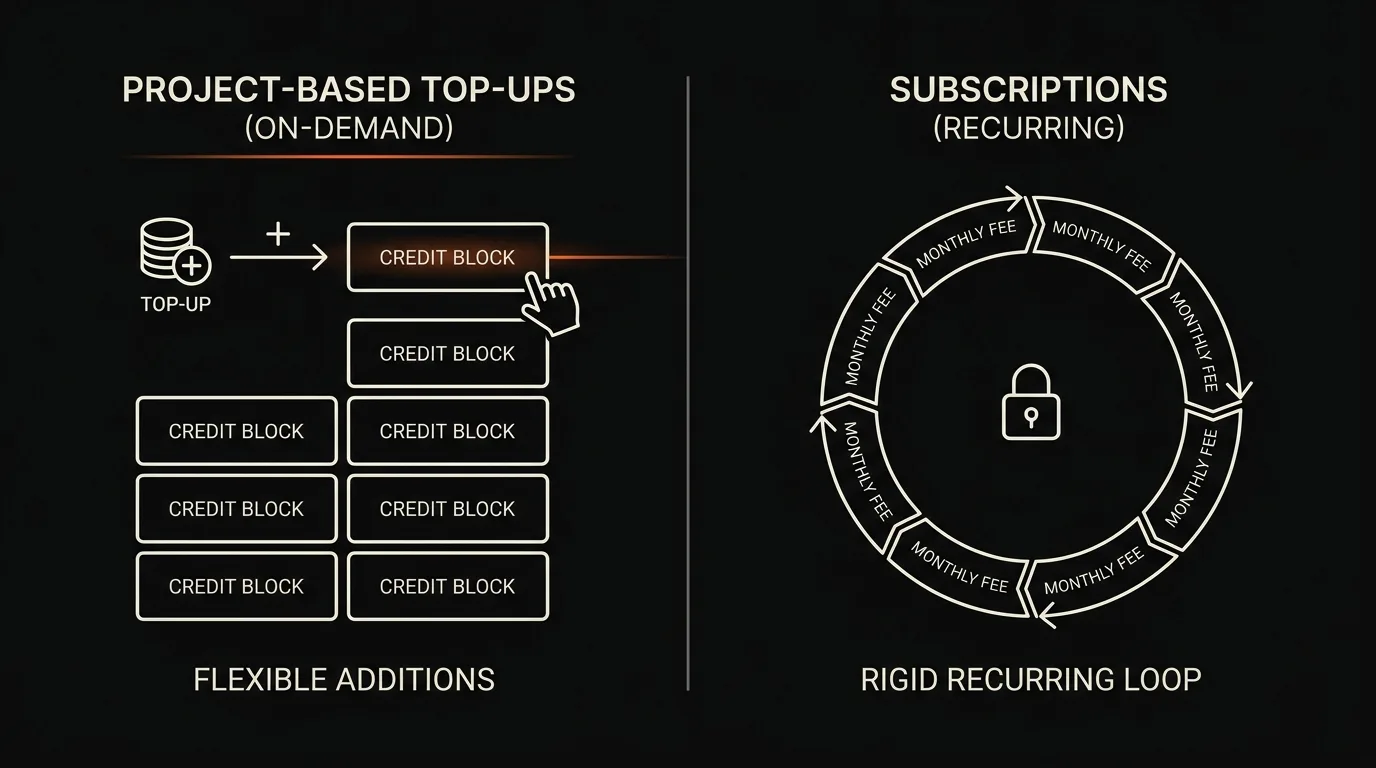
The biggest cognitive load in most AI products lands at the same moment: a new user finally understands what to build, writes their real prompt, and watches the free credits drain before the job is done. They do not think the plan was too small. They think the product is not for them, and they close the tab.
The usual reaction is to push those users harder toward a subscription. That is the wrong instrument for the moment. The fix is smaller and it comes from an unlikely place: mobile games.
The real reason your free tier loses people
A free tier is supposed to let someone prove to themselves that your product works. Most do the opposite. The credits run out before the first real project is finished, so the only thing the user proves is that they hit a wall. Then, at their lowest point of confidence, you present a monthly commitment. You have made the decision larger exactly when the user is least ready to make it.
You are asking a stranger to marry you before the first date is over.
What Free Fire figured out that your SaaS has not
Free Fire, the mobile game, is huge in India for a reason that has nothing to do with graphics. Its core audience is teenagers who do not have much money. So the game does not lead with a full season pass. It leads with top-ups, small in-game purchases starting as low as around 19 rupees, roughly a quarter.
At that price and with a visible time limit, the purchase stops feeling like a commitment and starts feeling like a small, reasonable yes. Players wait for the top-up offers. And here is the part that matters for your product: pile up enough of those small purchases and the total easily passes what a single season pass would have earned. Low friction plus low price beats one big ask.
The psychology of the small top-up
A small, time-boxed purchase sidesteps the question your subscription forces. Nobody has to decide whether they will still want your product next month. They only have to decide whether finishing this one thing is worth a few dollars right now. That is a much easier yes, and easy yeses compound.
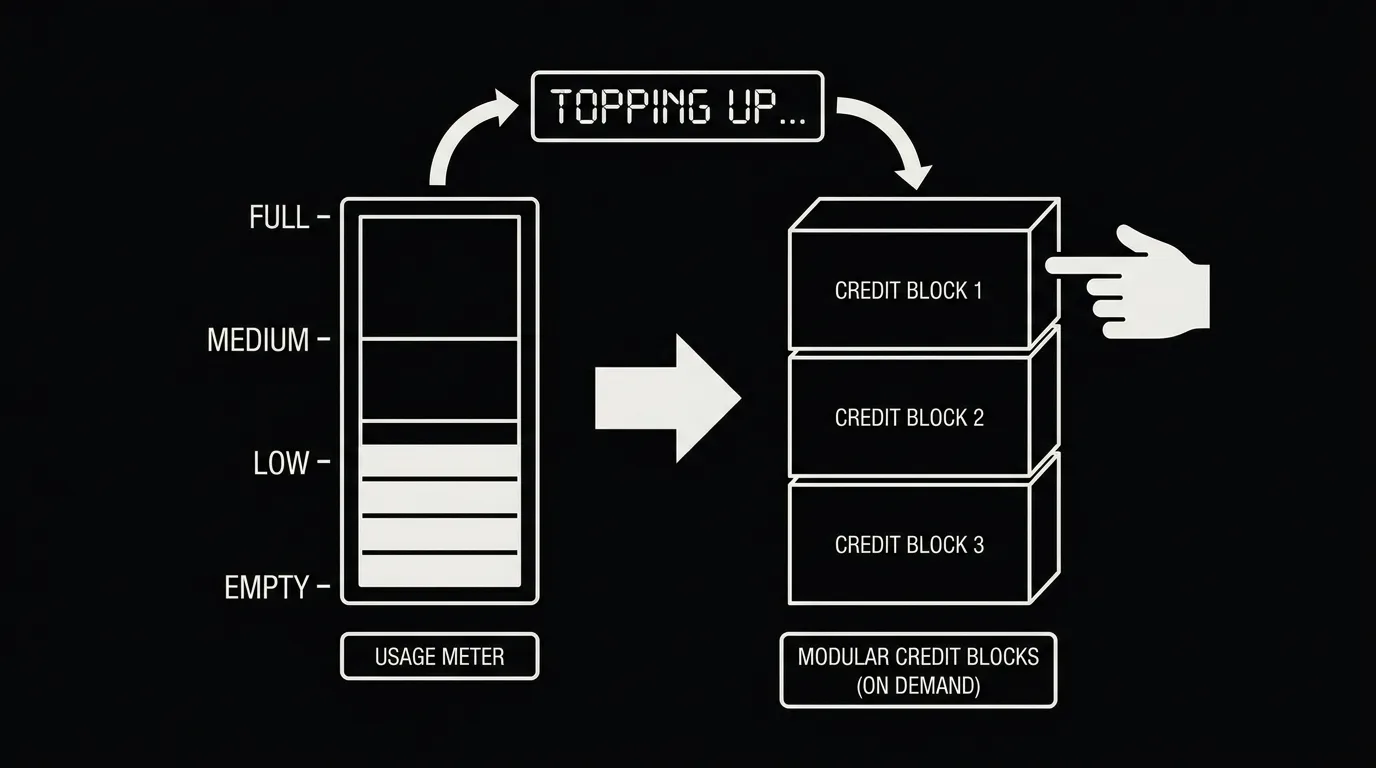
Subscriptions ask a question. Top-ups give a verdict.
Think about what runs through a user's head when your paywall appears mid-project. They are not certain they will use your tool again. Every category now has a cheaper or better-looking alternative one search away, so the first thought is always the same: is this worth my time, and is it worth a 20 dollar subscription for a single project?
Your subscription prompt amplifies that uncertainty. It arrives right as the user makes their biggest investment of effort, the moment they have typed a real task, and it asks them to bet on a future they have not decided on. A project top-up does the opposite. Offer three to five dollars in credits to finish the work in front of them and you are not asking whether 20 dollars is worth it. You are telling them the tool is capable of finishing what they started, and standing behind it. You replace an anxious question with a confident verdict.
How to apply project-based top-ups to your product
Trigger the top-up at the moment of investment
Do not surface it on a pricing page nobody scrolls to. Surface it the instant free credits run out mid-task, when the user has already committed effort and wants to see the result. That is when finishing is worth the most to them and the price feels smallest.
Price it for the deadline, not the relationship
Everyone is working against a deadline. Spending three to five dollars to finish today's project is an easy call in a way that a recurring plan is not. Price the top-up so the decision is about this task and this week, not about whether they are a forever customer.
Guarantee the outcome, do not sell the access
The top-up should carry an implicit promise: buy this and you will finish. Scope the credits to complete a real unit of work, not to strand the user again two prompts later. If your top-up runs out mid-task the same way the free tier did, you have taught the user that your product cannot be trusted to finish, which is worse than never charging them at all.
When a subscription still wins
None of this means subscriptions are dead. For a user who already runs the same workflow every week, a plan is simpler and cheaper for both sides than repeated top-ups. The point is sequencing. Let a top-up prove the value on one project, then let repeat usage graduate the user into a subscription on their own terms. Uncertain users buy top-ups. Convinced users buy plans. Do not force the second decision before the first one has happened.
How to test this without rebuilding billing
- 1Add one credit pack, priced for a single project, triggered the moment free credits run out mid-task.
- 2Scope the pack so a typical project actually finishes on it. Watch project completion rate, not just purchases.
- 3Measure repeat top-up purchases per user. Rising repeats are your signal that a subscription offer will now land.
- 4Only after the behavior is proven, add tiers or a plan upsell for the users who keep coming back.
Guide the user to a verdict instead of asking them a question they are not ready to answer. That is the whole idea, and it is cheaper to test than almost anything else on your roadmap.
Frequently asked questions
Instead of asking users to commit to a recurring subscription, you let them buy a small block of credits to finish the specific task in front of them, typically three to five dollars. The purchase is scoped to the project, not the relationship, so the decision is smaller and easier to say yes to.
Most free tiers run out of credits mid-task, often before the user has finished a single real project. They leave feeling the product could not do the job, and the next thing you ask for is a monthly commitment. You have made the decision bigger at the exact moment their confidence is lowest.
For first-time and uncertain users, usually yes, because a top-up matches how they actually feel: they are testing whether the tool fits one job. Subscriptions still win for proven, recurring workflows. Most mature products end up offering both and let usage graduate a user into a plan.
Start with a single credit pack triggered when free credits run out, priced for a deadline rather than a relationship. Measure completion rate and repeat purchases before you build tiers. Most billing tools already support one-time charges, so you can test the behavior before you invest in infrastructure.