Web Design · 8 min read
Why Your Website Isn't Converting (and 7 Fixes That Work)
You have traffic and no leads. That is a conversion problem, not a traffic problem, and it is usually cheaper to fix. Here are the seven reasons visitors leave without acting, and how to close each gap.
By Hivex Digital ·
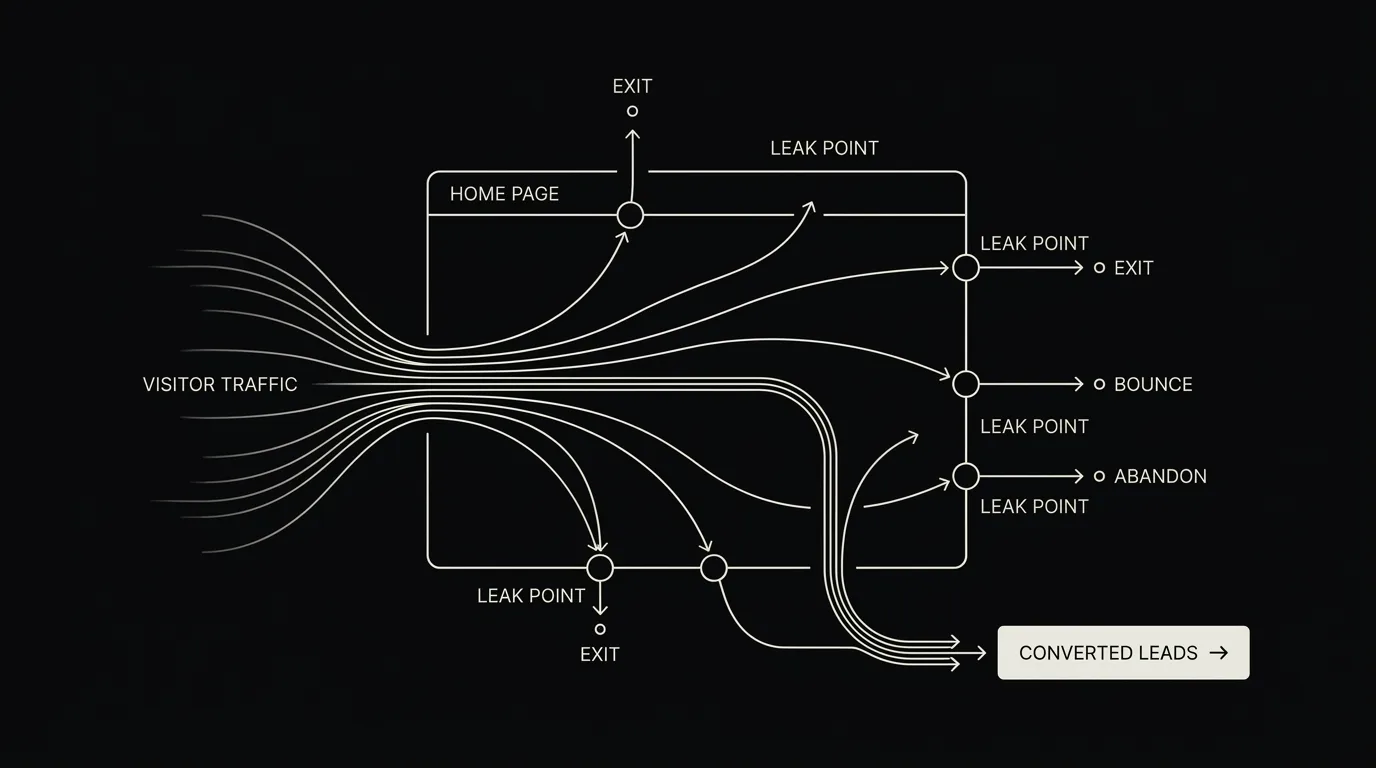
Here is a frustrating situation we see constantly. A business is getting visitors. The analytics look healthy. And almost nobody fills out the form or books the call. The instinct is to go buy more traffic, which is the most expensive possible response to the problem, because it does nothing about the leak.
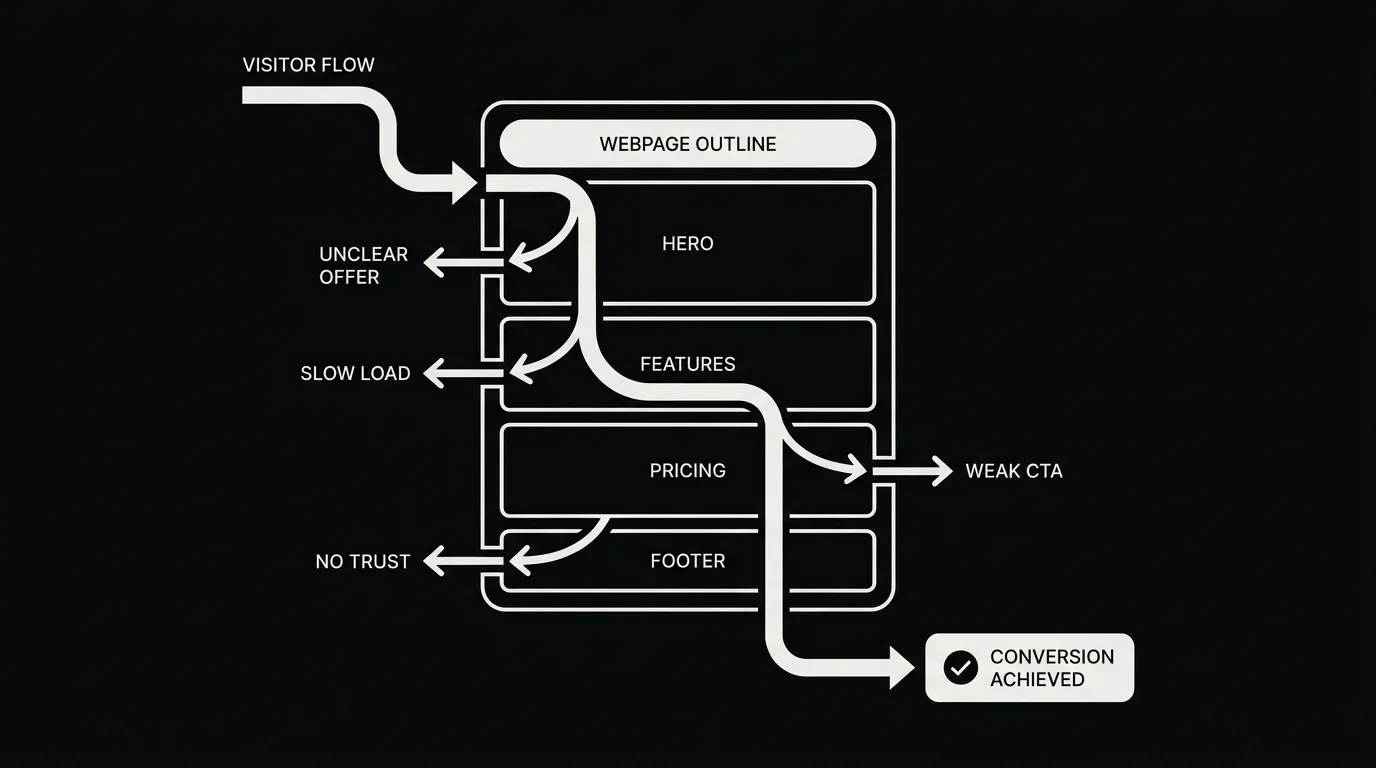
If you have traffic and no leads, you do not have a traffic problem. You have a conversion problem, and that is usually cheaper and faster to fix. Below are the seven reasons visitors leave without acting, in the rough order we find them.
1. Your offer is not clear in five seconds
A visitor lands on your page and gives it about five seconds to answer three questions: what is this, is it for me, and what do I do next. If your homepage headline is a clever tagline or a vague mission statement, you have failed all three and they are gone. The fix is unglamorous: say plainly what you do, who it is for, and what result they get. Clarity converts. Cleverness rarely does.
2. Your page is slow
Every extra second of load time costs you conversions, and on mobile the abandonment is brutal. A visitor who came from an ad you paid for will not wait for a heavy hero image and six tracking scripts to load. Speed is not a technical nicety; it is a revenue lever. We treat Core Web Vitals as launch criteria, not a later optimization phase, because a fast page converts more of the traffic you already paid to get.
3. Your call to action is weak or hidden
If a visitor has to hunt for how to contact you, most will not bother. Vague buttons like submit or learn more do not tell anyone what happens next. Make the primary action obvious, repeated, and specific. Book a free strategy call tells the visitor exactly what they get and what to expect. One clear action per page beats five competing ones every time.
4. There is no proof
Strangers do not trust claims. A page full of we are the best with nothing to back it up reads as noise. Reviews, named results, recognizable logos, and real testimonials do the convincing your copy cannot. Put proof where the decision happens, next to the call to action, not buried on a separate page nobody visits. Trust is what turns interest into action.
5. The message does not match what brought them
If your ad promised one thing and the landing page talks about something else, the visitor feels the disconnect and leaves within seconds. This is the most common reason paid traffic fails to convert, and it is entirely self-inflicted. The page has to continue the exact conversation the ad or search result started. Message match is not a detail; it is often the whole difference between a wasted click and a lead.
6. You are asking for too much, too soon
A ten-field form on a first visit is a wall. Every field you add costs you completions. Ask only for what you genuinely need to take the next step, and match the size of the ask to the size of the commitment. Someone just discovering you is not ready for a demo request with your budget and timeline; they might trade an email for something useful. Lower the first step and more people take it.
7. It is confusing on mobile
Most of your traffic is on a phone, and a site designed desktop-first shows it. Tiny tap targets, text that requires zooming, forms that fight the keyboard, and layouts that break all quietly kill conversions. Mobile is not a scaled-down version of the real site; for most businesses it is the real site. Design for how your traffic actually browses.
More traffic multiplies whatever your page already does. If the page converts at half a percent, buying more visitors just wastes money faster. Fix the page first.
Fix the leak before you open the tap wider
The reason conversion work pays off so well is leverage. You already have the traffic. Every point of conversion rate you recover applies to all of it, at no extra ad cost. Doubling a conversion rate from 1 to 2 percent doubles your leads without spending another dollar on traffic. That is why we push clients to fix the site before scaling spend, not after.
Work through the seven in order. Clarity first, then speed, then the call to action, then proof and message match. Most sites leak in three or four of these places at once, and closing them turns a page that decorates the internet into one that books calls.
Frequently asked questions
Traffic without leads almost always means a conversion problem, not a traffic problem. The usual causes are an unclear offer, a slow or confusing page, weak or hidden calls to action, and a mismatch between what brought the visitor and what the page delivers. Fixing those is typically faster and cheaper than buying more traffic.
It varies by industry and traffic source, but many service and B2B sites land somewhere between 2 and 5 percent for lead capture. The more useful benchmark is your own trend. If you are well below your industry norm or your rate is falling, the page, offer, or traffic quality needs attention.
Significantly. Conversion rates drop as load time climbs, and mobile visitors abandon slow pages quickly. Speed also affects search rankings through Core Web Vitals, so a slow site loses on both traffic and conversion at once.
Faster than most marketing changes. Because you are improving how existing traffic behaves rather than waiting to earn new traffic, clarity, speed, and call-to-action fixes can show measurable lift within days to a few weeks of going live.